


You know cybersecurity involves protecting systems and information. But what do you actually need to learn and how do you turn that knowledge into something you can use?
TechForward Academy’s Cyber Ready Program brings together six connected subject areas: Hardware & Operating Systems, Enterprise Computing Infrastructure, Systems Administration, Information Security, Networking, and Artificial Intelligence Awareness.
The program is designed to help you understand how technology works, investigate problems, make informed decisions, and explain what you did. It provides a foundation for early-career IT professionals and career changers preparing for deeper technical learning.
Here is what each subject means, with practical examples of how that knowledge applies.
1. Hardware & Operating Systems: Understand the computer in front of you
Every application depends on physical computing resources and an operating system. Hardware includes components such as processors, memory, and storage. Operating systems, including Windows and Linux, manage those resources and allow applications to run.
You’ll explore how these pieces work together, how files and processes are managed, and how to approach common problems.
Practical example: A computer becomes slow when several applications are open. Before changing settings, you examine processor activity, available memory, and storage use. You begin narrowing down the cause instead of assuming the computer needs replacing.
This foundation helps you distinguish a performance problem from behavior that deserves further security investigation.
2. Enterprise Computing Infrastructure: See how the whole environment fits together
A workplace depends on more than individual computers. Employees use shared applications, servers, cloud services, storage, and identity systems, the services that help determine who someone is and what they can access.
Enterprise computing infrastructure is the collection of technology that allows those services to function together.
You’ll learn to look beyond one device and understand the relationships between systems.
Practical example: An employee cannot open a business application. You map the basic path: their laptop connects to the network, verifies their identity, and reaches the application and its data. That map helps you identify where the failure might be.
Understanding these dependencies helps you troubleshoot systematically and recognize how a problem in one service can affect others.
3. Systems Administration: Learn how technology is managed day to day
Systems administration involves configuring and maintaining the technology people rely on. That includes managing user accounts, assigning permissions, applying updates, and checking that services operate as expected.
You’ll explore how routine administrative work affects both reliability and security.
Practical example: A new employee needs access to a shared folder. You determine which access their role requires, assign the appropriate permissions, and verify that they can complete their work without gaining unnecessary access to other information.
The lesson extends beyond creating an account. It develops the habit of making a deliberate change, checking the result, and documenting what happened.
4. Information Security: Understand what needs protection and why
Information security connects technical decisions to risk. You’ll learn about threats, vulnerabilities, authentication, access controls, and the protection of information.
These concepts help you ask useful questions: What could go wrong? What would be affected? Which safeguards would reduce the risk?
Practical example: You receive a message asking you to reset a work password urgently. Instead of following the link, you examine the request, verify it through a trusted channel, and follow the appropriate reporting process.
The broader lesson is to evaluate evidence before acting. Security judgment includes knowing when to investigate, when to escalate, and when an apparently convenient action could expose information.
5. Networking: Understand how devices communicate
Networks connect computers, applications, and services. You’ll explore concepts such as IP addresses, domain names, ports, and the movement of data between systems.
Understanding networking helps explain both everyday connectivity problems and the paths that suspicious activity might follow.
Practical example: A computer is connected to Wi-Fi but cannot open a website. You check its network configuration, whether it can reach the network gateway, and whether the website’s name resolves to an address.
Each check narrows the problem. This structured approach becomes useful later when examining unusual connections or investigating how activity moved between systems.
6. Artificial Intelligence Awareness: Use AI with technical judgment
AI awareness includes understanding where AI can help, where it can fail, and what information needs protection when using it.
Cyber Ready’s curriculum connects AI to technical work: supporting investigation and documentation, recognizing AI-enabled threats, and understanding that AI tools themselves require safeguards.
Practical example: You ask an approved AI assistant to explain a sanitized error message. You compare its explanation with the original evidence and trusted documentation before following its suggested fix.
The skill is evaluating the answer, protecting sensitive information, and remaining responsible for the decision.
What gives Cyber Ready its practical focus?
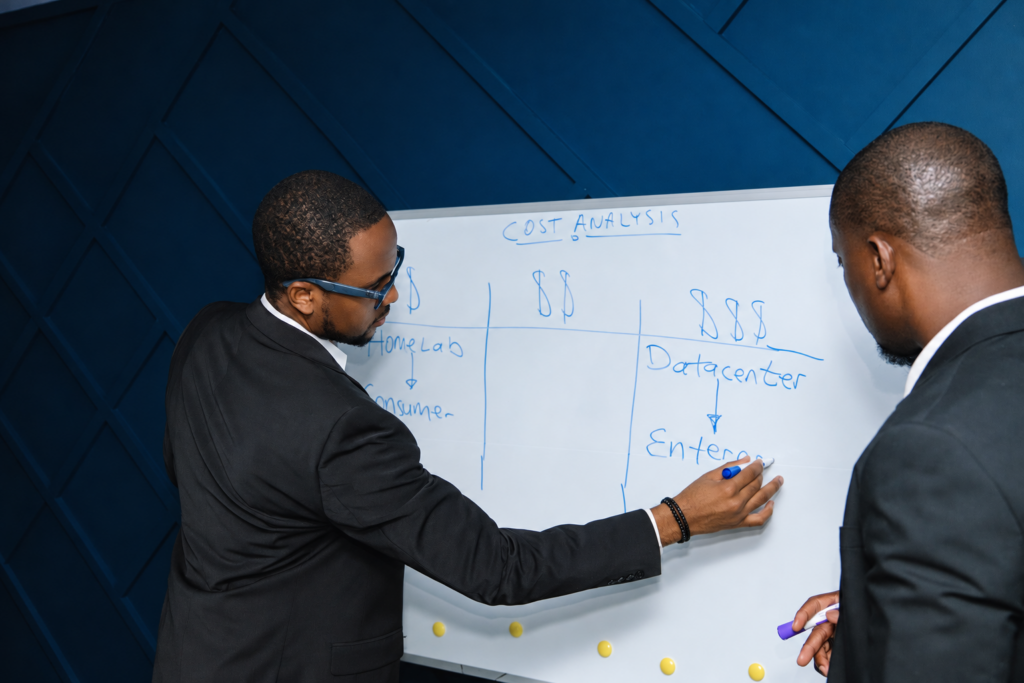
TechForward’s approach emphasizes understanding, applying, verifying, and documenting.
The curriculum is designed to connect technical explanations with hands-on practice, troubleshooting, and professional documentation. Learners are encouraged to explain why a step matters, check whether it worked, and preserve evidence of their work.
Those habits help knowledge transfer between tools and environments. They also give you a clearer way to describe your thinking to a colleague, instructor, or prospective employer.
The six subjects reinforce one another. Consider that shared-folder example: the employee uses an operating system, connects through a network, and reaches infrastructure managed by an administrator. Information security guides the access decision. An AI assistant might help draft documentation, but a person must verify its accuracy.
Cyber Ready brings together the complementary experience of Debo Akonai, MBA, CISSP, Founder & CEO, and Russell Oyewole, Co-Owner and Chief Technology Officer—both instructors at TechForward Academy. Debo’s background spans cybersecurity engineering, cloud security, security operations, identity, and risk management, connecting technical decisions to their consequences for an organization. Russell brings experience in system design, security data, analytics, and SIEM architecture, shaped by his foundation in civil engineering and his focus on how components work together.
Their combined perspective gives Cyber Ready its distinctive approach: teaching students to understand an entire technology environment, troubleshoot methodically, verify results, and explain their decisions. For learners, that means connecting the six subject areas to the practical challenges of operating and protecting real systems. Meet Debo and Russell.
Understanding those connections is central to the program.
Frequently Asked Questions
Who is Cyber Ready designed for?
Early-career IT professionals and career changers seeking a structured technical foundation before progressing into more specialized IT and cybersecurity learning.
Is Cyber Ready an industry certification?
A TechForward certificate of completion is distinct from an industry certification. Completing the program does not automatically award an external certification or guarantee employment.
Why learn all six subjects?
Technical problems often cross subject boundaries. Learning how devices, systems, networks, security, and AI relate helps you investigate more thoughtfully and prepare for deeper study.
Build a foundation you can use
Your starting point should help you understand both the individual technologies and how they work together.
Explore TechForward Academy and learn more about the Cyber Ready Program.